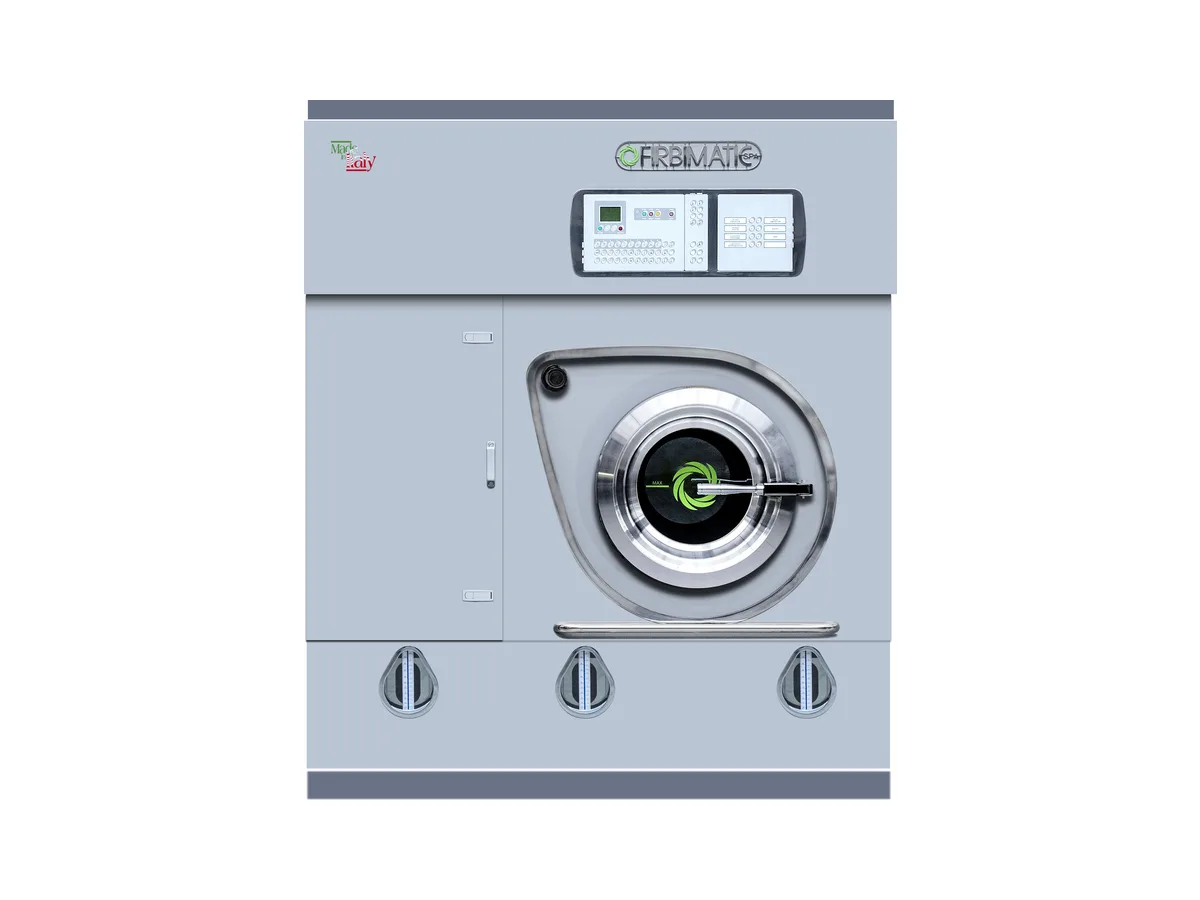
When you start shopping for a new dry cleaning machine, the first fork in the road is the solvent: perc, or one of the alternatives. Firbimatic builds machines for both paths, so the better question is which one suits your shop, your garments and your customers. This guide explains the two paths, shows where each part of the Firbimatic range sits, and lists what to ask before you commit.
The perc path
Firbimatic's perc machines sit in the perc washing family. Firbimatic points to perc's speed on greasy stains as its main strength, since quick stain removal keeps the production line moving. That makes it a natural fit for shops with heavy volumes and a need for fast turnaround.
Three series make up the family:
- F Series: loads between 10 and 25 kg. Firbimatic offers options including Energy Still (heat recovery), Eco System (treats still sludge), Clean Still (a pump clears the still for you) and Integrated Coalperc (aimed at lowering perc emissions as a cycle finishes).
- Vortex: loads between 18 and 40 kg, with a drying chamber and fan placement intended to cut drying time.
- Tandem: also 18 to 40 kg, made for shops with large production volumes.
Firbimatic says each series can be had as a wider machine with three tanks or as a slimmer, modular or Tandem arrangement with two, so you can match the layout to a tight shop floor.
The alternative solvent path
The multi-solvent line is Firbimatic's answer for owners who want to move away from perc or keep their options open. Firbimatic lists Sensene, Higlo, Intense, GreenEarth (silicone-based) and hydrocarbon solvents among those its machines run today. Switching from one to another means cleaning the machine internally and then changing its settings to suit the new product's properties.
The line includes several series:
- Ecogreen: 18 to 40 kg, with either a rigid or a hanging basket.
- Saver: 10 to 25 kg, designed for Class III aliphatic solvents and pitched at small to medium laundries. Firbimatic says it gets by without conventional distillation.
- F AS Series: offered as a standard three-tank model or a slimmer two-tank model that saves space, starting at 10 kg.
- SM series: suspended-basket hydrocarbon machines with a high spin speed, designed to bring drying times down.
- Tandem AS: modular machines for big volumes, in two sizes: a pair of 25 kg units or a pair of 32 kg units.
Alternative solvents behave differently from perc in a few practical ways. Firbimatic notes that they are combustible, so its machines carry Class IIIA equipment and safety features. It also points out that odour can develop if a machine is not maintained consistently, which is why it designs features such as self-cleaning tanks. Always follow the machine manual and the requirements of your state regulator.
Which path suits which shop
Firbimatic's own position is that no single method fits everyone. The right choice is the one that serves your customers and your business. As a rough guide:
- Perc may suit you if you run high volumes, want short cycles and deal with a lot of greasy soiling.
- An alternative solvent may suit you if gentle treatment of fibres, colours and the feel of delicate fabrics is a priority, or if you want the freedom to change solvent later without changing machines.
- Customer expectations matter either way. Some customers care about the environmental side of dry cleaning, and that can influence how you position the business.
Questions to ask before you buy
- How much work do you really process at peak times? Size the machine to your actual volumes, not only to the floor space.
- What will it cost to run? Ask about energy, water and solvent use, not just the purchase price.
- How fast is a full cycle, including drying? Slow drying or vapour recovery can hold up the whole shop.
- Could your solvent choice change? If you might switch later, ask whether the machine can be adjusted rather than replaced.
- How easy is routine maintenance? Ask how reachable the filters, still and drying components are.
- What service and spare parts support is available in Australia? A good machine still needs a dependable team behind it.
- What does your state regulator expect? Check requirements for your chosen solvent before you order.
Next step
If you are weighing up perc against an alternative solvent, it helps to talk it through with someone who knows both ranges. Get in touch with Spencer Systems, the exclusive Australian distributor of Firbimatic, to discuss your shop and request a quote.